
COMPRESS
Servicing compressible crates for supermarket delivery companies.
Runner-up in the University of Cambridge Food Make-It Hackathon
Hackathon sponsors:


Duration
3 Days,
2020 Summer
Team
Xinyue Ruan
Shiv Mistry
Rosh
Ava
My Primary Role
Primary Research
Ideation
Video Editing
Business Model Envision
Tools
Composite Materials
Loop, Slack
Illustrator, Photoshop,
Miro, Zoom, Keynote
Design Process
DAY1
Desk Research
Group Discussion
Ideation
DAY2
Making model
Business model Building
DAY3
Final Prototype
Video Making
Pitching
Background
The COVID-19 pandemic is highlighting the inflexibility of our food systems. The fresh fruit & vegetable supply chains are struggling to adapt to the changes caused by the lockdown around the world. As the bulk buyers such as restaurants and schools all shut down, farmers were forced to dump thousands of tonnes of lettuce, potatoes, and strawberries. Local charity kitchens could not absorb all the donated surplus produce from local farms. In the meantime, consumers faced empty shelves at supermarkets due to panic buying. Many consumers turned to online shopping, resulting in a drastic increase in fruit & veg box deliveries. But they had to turn down new customers due to the limited capacity.
How can we channel the surplus to those who are in need and minimize valuable fresh produce being wasted? Beyond the COVID-19, what could help the fruit & vegetable supply chain become more resilient and prepared for future disruptions such as weather extremes, Brexit, pandemics? How can we build solutions to diversify the routes to consumers? What could help the farmers to be more agile for different markets? What can assist ugly fruit & veg delivery start-ups cope with volatile supply and demand?

Images clockwise from top left: masked customers at farmer's market, farmers donate unsold produce to local charities, harvest difficulties due to COVID-19, vegetables dumped at farms, empty shelves during the panic buying, demand surged for fruit & veg box deliveries
Problem Address
1
Delivery services remain inefficient, unable to match high demand from the pandemic crisis.
2
Delivery crates are not filled to maximum capacity
Storage trucks have wasted space potential. Currently, food delivery trucks, e.g. Ocado, use one large crate per household- this means if a household hasn’t bought the maximum space (or fill a whole crate and more), this means there is wasted space within the truck. This ‘negative space’ could be utilised to maximise delivery truck efficiency and productivity.

How Might We...
How might we maximise space capacity within delivery vans?
How might we increase efficiency of deliveries during crisis and the profit for supermarkets?
Introducing
COMPRESS
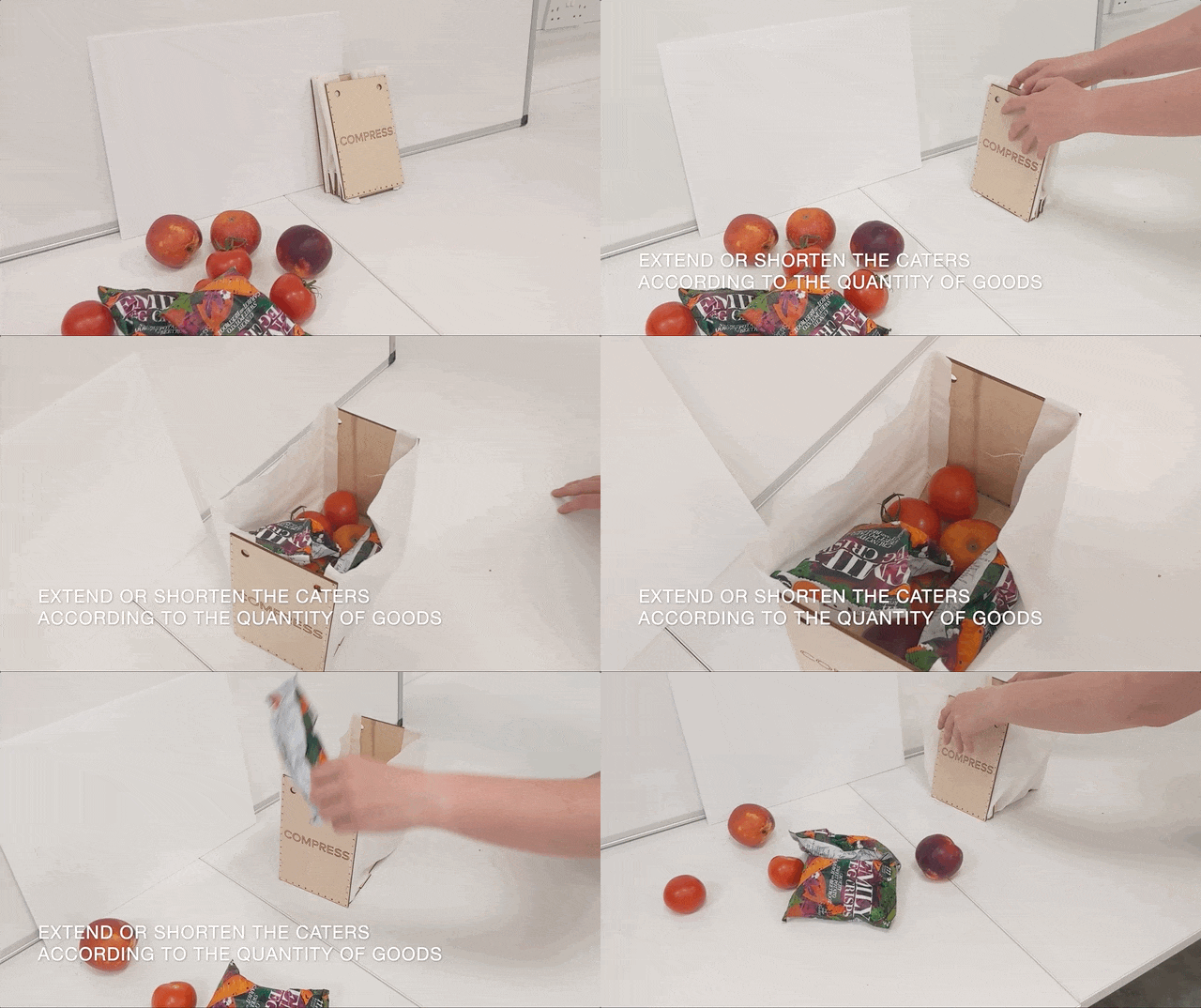
Compressible Crates a new design to help lift the loading space of supermarket trucks

How Does It Work?
1. Converting static, fixed-size form plastic delivery boxes to compressible bags. Bag hooks onto rail track inside the van,
locking it in place to reduce movement and damage of goods.
2. The compress is achieved through a concertina effect of our mouldy silicon crates, ensuring strength, flexibility and
durability for freezer compartments. So more items could be delivered in a single trip.
3. The bags are made of the same durable material as ‘long-life’ canvas bags found in shops.

Prototyping


Primary Target Market :
Grocery delivery services for large scale supermarkets.
Supermarkets purchased the crates for £8 each to make better deliveries more efficient and cost-effective.
Although we outsource our manufacturing. Supermarkets choose us because we provide a service to install our compressible crates into delivery vans.

Buiness Model
